Can You Leave Medication in the Car?
It’s something many of us have done.
You’re running errands, stopping for lunch, or popping into the supermarket. Your medication is in your bag, so you leave it in the car for “just half an hour.”
Unfortunately, that short period could expose some medicines to temperatures well outside their recommended storage range.
Whether you live with diabetes, severe allergies, rheumatoid arthritis, Crohn’s disease or another condition requiring temperature-sensitive medication, understanding how quickly a vehicle heats up could help protect the effectiveness of your treatment.
How Hot Does a Parked Car Get?
Even on what feels like a pleasant summer’s day, the inside of a parked vehicle can become dangerously hot.
Research has shown that the temperature inside a parked car can rise by 20°C or more in as little as 10 minutes, with temperatures often exceeding 50–60°C during warm weather.
The dashboard, glove compartment and seats can become even hotter when exposed to direct sunlight.
Opening a window slightly makes very little difference.
For medicines that should be stored below 25°C—or refrigerated before use—these temperatures can quickly become a problem.
Which Medicines Are Most at Risk?
Many people associate temperature-sensitive medication with insulin, but there are many others.
Examples include medicines used to treat:
- Diabetes
- Rheumatoid Arthritis
- Psoriatic Arthritis
- Ankylosing Spondylitis
- Crohn’s Disease
- Ulcerative Colitis
- Psoriasis
- Growth hormone deficiency
- Severe allergic reactions (adrenaline auto-injectors)
Always check the patient information leaflet supplied with your medication and follow the manufacturer’s storage recommendations.
Why Heat Matters
Many modern injectable medicines are made using delicate biological ingredients.
Exposure to excessive heat may reduce their effectiveness, even if the medicine still looks perfectly normal.
Unlike food that spoils visibly, medication doesn’t usually change colour, smell or texture when it has been exposed to temperatures outside its recommended range.
That means it’s often impossible to tell whether it has been affected simply by looking at it.
Common Places Medication Gets Too Hot
Many people don’t realise how often medication is accidentally exposed to excessive heat.
Common locations include:
- A parked car
- The boot of a car
- Glove compartments
- Beach bags
- Picnic baskets
- Festival tents
- Caravan or campervan storage
- Garden tables in direct sunshine
- Window ledges
- Conservatories
If the environment feels hot to you, it may be even hotter for your medication.
What About Winter?
Heat isn’t the only concern.
Leaving medication in a vehicle during freezing weather can also cause problems for certain medicines.
Some medications should never be frozen, as freezing temperatures may damage their structure in much the same way as excessive heat.
If temperatures fall below freezing overnight, medication left inside a vehicle could be affected.
Tips for Keeping Medication Safe
Fortunately, protecting your medication doesn’t have to be difficult.
Here are a few simple habits that can make a big difference:
✔ Take it with you
If possible, never leave temperature-sensitive medication inside a parked vehicle.
✔ Keep it out of direct sunlight
Even while travelling, avoid leaving medication on dashboards or exposed seats.
✔ Plan ahead
If you’re spending the day away from home, think about how you’ll keep your medication within its recommended temperature range.
✔ Check storage instructions
Different medicines have different requirements. Always read the patient information leaflet or speak with your healthcare professional if you’re unsure.
✔ Use an appropriate cooling solution
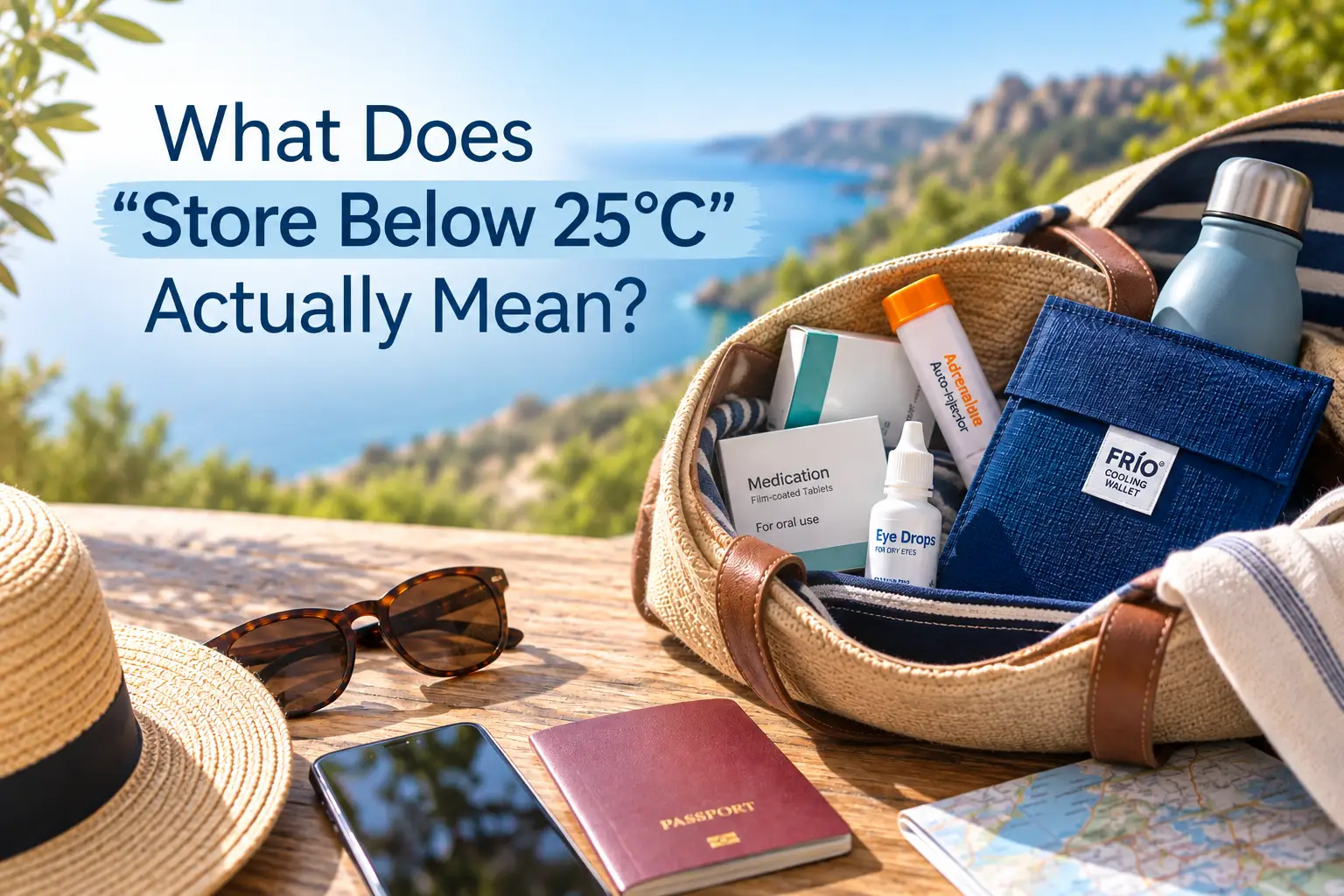
If you’ll be away from refrigeration for extended periods, using a purpose-designed medication cooling wallet can help maintain a safer environment for temperature-sensitive medicines while you’re out and about.
Travelling This Summer?
Whether you’re commuting to work, heading to the beach, visiting family or enjoying a holiday, your medication deserves the same level of care as it receives at home.
A little planning before you set off can help ensure your treatment remains protected throughout your journey.
Keep Your Medication Protected Wherever Life Takes You
For over 30 years, FRIO has helped people safely carry temperature-sensitive medication without the need for ice packs, batteries or electricity.
FRIO cooling wallets are lightweight, reusable and trusted by people in more than 70 countries, helping to keep medication cool while travelling, enjoying the outdoors or simply getting on with everyday life.
Whether you’re popping to the shops or setting off on your next adventure, you can have confidence that your medication is protected.