Common Myths About Medication Storage – And the Truth You Need to Know
When it comes to medication, how you store it is just as important as taking it correctly. Unfortunately, there are many misunderstandings and myths about medication storage — especially around temperature — that can put effectiveness and safety at risk.
Many commonly used medications must be kept below 25°C, yet people often assume they are safe anywhere. Let’s clear up some of the most common myths and explain how to properly protect heat-sensitive medication.
Myth 1: “Room temperature is always safe”
The truth:
“Room temperature” does not always mean safe. In the UK and abroad, indoor temperatures can easily rise above 25°C, particularly during summer, heatwaves, travel, or when medication is kept in bags or cars.
Once medication exceeds its recommended storage temperature, it may:
- Lose effectiveness
- Become unstable
- Fail when you need it most
This is especially important for insulin, biologics, adrenaline auto-injectors, and injectable medications.
Myth 2: “If it looks fine, it’s still fine”
The truth:
Many medications don’t show visible signs of heat damage. Even if insulin looks clear or an injection pen appears normal, heat exposure may already have reduced its effectiveness.
Medication degradation is often invisible — meaning you might not realise there’s a problem until the medication doesn’t work as expected.
Myth 3: “I can just use ice packs”
The truth:
Ice packs may seem like a good solution, but they can actually be risky. Ice packs can:
- Freeze medication
- Cause temperature swings
- Be impractical for daily use or travel
Freezing can damage medications just as much as overheating. Consistent, controlled cooling is far safer than extreme cold.
Myth 4: “Medication only overheats in hot countries”
The truth:
Heat damage can happen anywhere, including the UK. Medication can easily overheat:
- In handbags, backpacks, or suitcases
- Camping with a caravan or tent
- In cars, even on mild days
- At festivals, sporting events, or on the beach
- During flights or long journeys
You don’t need tropical temperatures for medication to exceed safe limits.
Myth 5: “Emergency medication doesn’t need special care”
The truth:
Emergency medication such as adrenaline auto-injectors (e.g. EpiPen®) must also be kept within a safe temperature range. Heat exposure can reduce reliability — which is critical when seconds matter.
Emergency medication should be protected every day, not just when travelling.
Myth 6: “A fridge is the only safe option”
The truth:
While refrigeration is sometimes required, it’s not always practical — especially when you’re out, at work, travelling, or on holiday.
This is where portable, electricity-free cooling solutions become essential for maintaining safe temperatures without freezing medication.
How FRIO Helps Protect Medication Safely
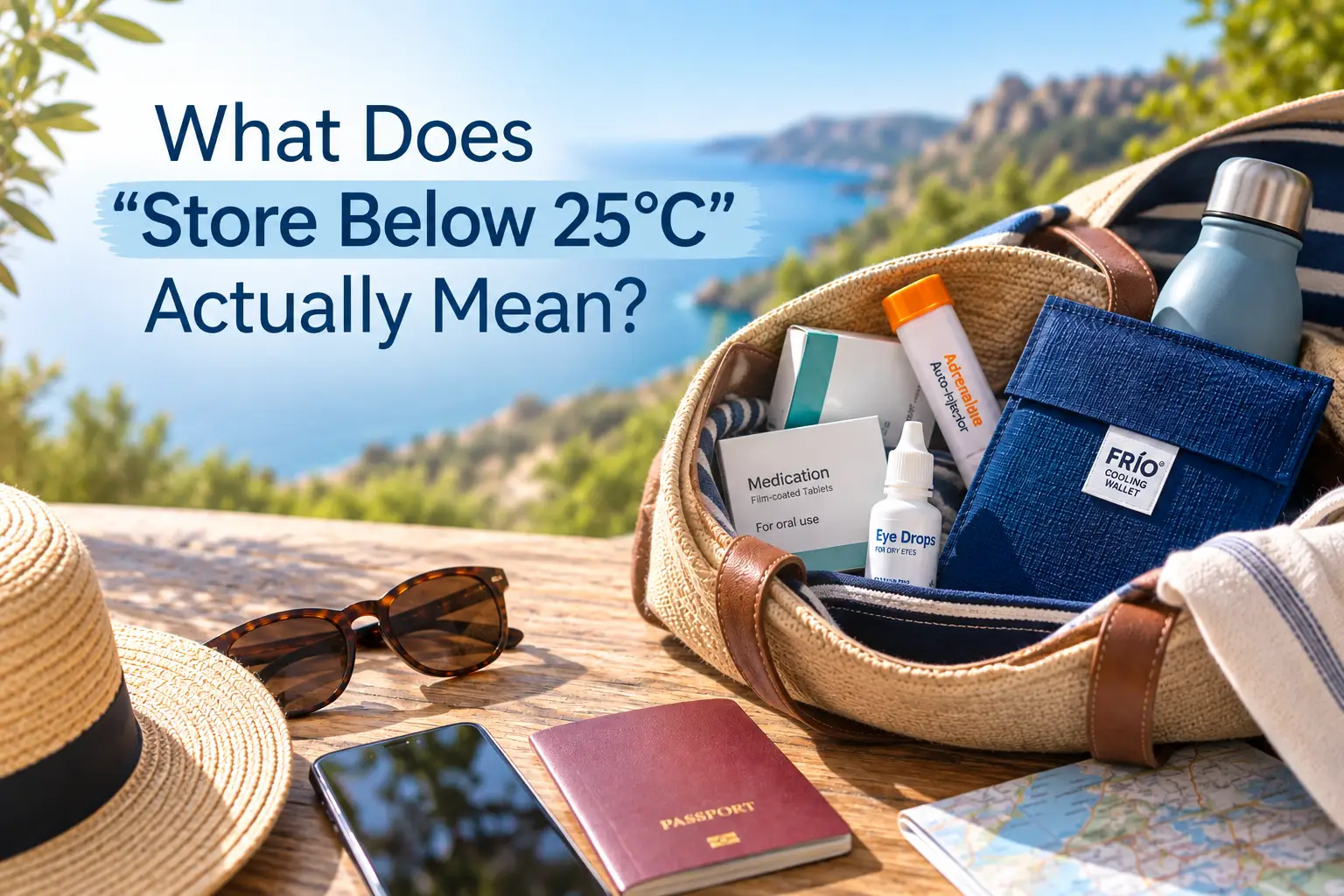
FRIO wallets are designed specifically to protect heat-sensitive medication by keeping it below 25°C using only water. No ice packs, no batteries, no electricity.
FRIO wallets:
- Activate in water
- Use evaporative cooling
- Maintain a safe temperature range
- Are reusable and travel-friendly
They are suitable for a wide range of medications, including insulin, biologics, adrenaline auto-injectors, and other prescriptions that must not overheat.
The Bottom Line
Medication storage myths can lead to serious consequences. Heat exposure doesn’t always come with warning signs, and once medication is damaged, it can’t be reversed.
Understanding the facts — and using the right protection — helps ensure your medication works exactly as intended, wherever life takes you.